To Core or Not To Core – That is the Question • コアにするか、しないか——それが問題だ
Jan 27, 2026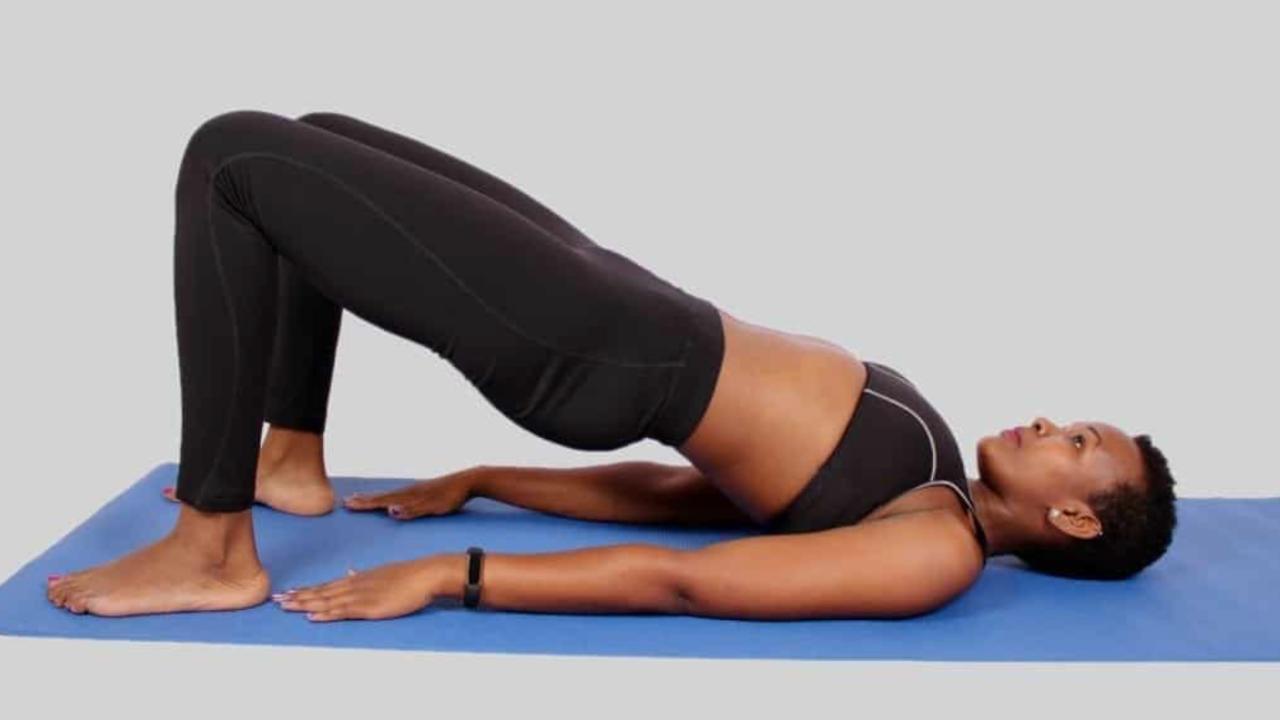
「以下日本語」
“This session solved a big question I have had for a long time.”
So declared Nana, one of several young Pilates Educators who joined my PILANDES session last Saturday. She had wanted to do Bridge - shown above (not Nana) - but had been unclear about her relationship with her “core”. Many scientifically invalidated concepts around “core” still linger in the fitness world, causing untold misery for many.
Nana was one of those people.
The concept of “core” – as a separate functional unit that can be consciously pre-activated before a movement - developed in late-20th-century medical rehabilitation, due to an initial finding that those with back pain delayed activating the transversus abdomini muscle before action. This idea of “non-activation being the problem” crossed over into the field of Sports Science until it was finally adopted by the fitness industry. By then, the idea had morphed into a simple, distorted formula of “activate and do”.
This concept still persists today.
However, the scientific community slowly abandoned this strong prescriptive interpretation* within medical rehabilitation. This new understanding did not universally flow back into the fitness industry. Original Pilates was never about continuous tightening, however modern Pilates seems to have split into two groups:
1. those that continue to teach core as a dynamic, integrated response to activity
2. those that cue for engagement before action, and continue this cueing in the activity
Nana had been a follower of this second way of thinking. Although it wasn’t working for her, she hadn’t realised it was an outdated idea.
We don’t have “core” in Alexander work – instead we talk about the underlying Postural Movement System (PMS). This is both a simple and complex mechanism. PMS has at least two acknowledged functions: balance and APAs. Balance we all understand – we don’t often think about it, it just happens. APAs are the same.
An APA is “Anticipated Postural Adjustment”. Yes, these are triggered in anticipation of our action but they are both automatic and unconscious and shaped very specifically to our intention. For example, as you decide to lift an arm, turn your head or adjust your legs – your unconscious postural response is configured in an infinite variety of ways. You could not possibly consciously “think” each APA before your every move!
It isn’t that our “core” has to be switched on – rather, our whole Self lives in readiness to respond as necessary to whatever we want to do.
When Nana was doing her Pilates Bridge, she was trying to “hold her pelvis” in position because it felt unstable. The irony we discovered in the session was that it was her effort to stabilise the pelvis that caused its instability!
Why?
In Alexander terms, her determination to “stabilise” her pelvis caused her Voluntary Movement System (VMS) to fire up muscles, in effect smothering the automatic unconscious responses of her APAs. I asked Nana instead to focus on three of her five postural joints, and let the stabilisation of her pelvis be automatically configured by PMS. That’s what APAs are designed to do - we get our “Self” out of the way so they can do it!
Alexander discovered that postural movements – also later described as APAs – have an underlying unidirectional pattern, well known in the Alexander world as “directions”. I now describe these “directions” through my concept of the 5 postural joints – and these can be consciously cued. This is what my Alexander touch communicated to Nana as she reperformed her Bridge - finally getting the pelvic stability that had evaded her for so long.
Alexander touch is a subtle and mysterious thing – which I have written about extensively.
For those wishing to deepen their understanding of this cueing method, in March I am embarking on an intensive writing project. Every weekday for a month, I will be writing about how Pilates and Alexander's discoveries are being fused into my new PILANDES training. I will not send these exploratory emails to this main list, so if you want to peek at how I am developing my PILANDES training, register for free here:
https://www.alexandertechnique.co.jp/PILANDES_MailMagu
My new training will occur over 8 months, starting after Golden Week at Zen Place in May. We will be meeting on Tuesday and Wednesday mornings in Tokyo, and Thursday and Friday mornings in Osaka, between 08:30-11:00.
Join my one-month writing intensive to discover more:
https://www.alexandertechnique.co.jp/PILANDES_MailMagu
PILANDES is my research project for developing an Alexander-enhanced Pilates practice.
Stay tuned.
*** JAPANESE ***
コアにするか、しないか——それが問題だ
「このセッションで、長い間抱えていた大きな疑問が解けました。」
そう語ったのは、先週土曜日に私のPILANDESセッションに参加した、数名の若いピラティス指導者の一人であるNanaでした。彼女は、上に示したブリッジ(ピラティス・ブリッジ/ブリッジ、写真はNana本人ではありません)を行いたいと思っていましたが、自分の「コア」との関係がはっきりしていませんでした。科学的にはすでに否定されている「コア」をめぐる概念が、フィットネスの世界にはいまだ多く残っており、それが多くの人に言いようのない苦しさをもたらしています。
Nanaも、その一人でした。
「コア」を、動きに先立って意識的に事前活性化すべき独立した機能単位として捉える考え方は、20世紀後半の医療リハビリテーションの分野で発展しました。腰痛を持つ人は、動作に先立って腹横筋(トランスヴァース・アブドミニス)の活動が遅れる、という初期の研究結果がその背景にありました。「活性化していないことが問題である」というこの考え方は、スポーツ科学の分野に広がり、最終的にはフィットネス業界に取り入れられました。その時点で、この考えは「活性化してから動く」という、単純化され歪んだ公式へと変質していました。
この概念は、現在でもなお根強く残っています。
しかし、医療リハビリテーションの分野では、科学界はこの強い処方的解釈を徐々に手放していきました*。ところが、この新しい理解は、必ずしもフィットネス業界全体に還流したわけではありません。オリジナルのピラティスは、決して持続的な緊張を求めるものではありませんでしたが、現代のピラティスは、どうやら二つの流れに分かれているように見えます。
1. コアを、活動に対する動的で統合された反応として教え続けている人たち
2. 動作の前にエンゲージメントをキューイングし、そのまま動作中もそれを続ける人たち
Nanaは、この二つ目の考え方を実践していました。それが自分にはうまく機能していなかったにもかかわらず、それが時代遅れの考え方だとは気づいていなかったのです。
アレクサンダー・ワークには「コア」という概念はありません。その代わりに、私たちは基盤となる姿勢運動システム(Postural Movement System:PMS)について語ります。これは、単純でもあり複雑でもある仕組みです。PMSには、少なくとも二つの認められている機能があります。それがバランスとAPAです。バランスについては誰もが理解しています——普段は意識しませんが、自然に起こっています。APAも同じです。
APAとは「Anticipated Postural Adjustment(予測的姿勢調整)」のことです。これは動作に先立って引き起こされますが、自動的かつ無意識であり、しかも私たちの意図に非常に特異的な形で組み立てられます。たとえば、腕を上げようと決めたり、頭を回したり、脚を調整しようとした瞬間に、無意識の姿勢反応は無限ともいえる多様な形で構成されます。私たちは、動作のたびに一つ一つのAPAを意識的に「考える」ことなど、到底できません。
問題は「コア」をオンにすることではありません。むしろ、私たちの全体としての自己が、何をしたいかに応じて必要な反応ができる状態で、常に待機しているということなのです。
Nanaがピラティスのブリッジをしていたとき、彼女は不安定に感じる骨盤を「保とう」としていました。セッションの中で私たちが発見した皮肉は、まさにその安定させようとする努力こそが、不安定さを生み出していたということでした。
なぜでしょうか。
アレクサンダーの用語で言えば、骨盤を「安定させよう」とする彼女の意図が、随意運動システム(Voluntary Movement System:VMS)を通して筋活動を過剰に引き起こし、その結果、APAによる自動的で無意識の反応を事実上覆い隠してしまっていました。そこで私はNanaに、五つの姿勢関節のうち三つに注意を向け、骨盤の安定はPMSによって自動的に構成されるままに任せるよう促しました。APAとは本来そのためにあるものであり、私たちは「自己」を脇に置いて、それらが働けるようにする必要があるのです。
アレクサンダーは、後にAPAとして記述されることになる姿勢運動が、根底に一方向性のパターンを持っていることを見出しました。これはアレクサンダーの世界では「ディレクション」としてよく知られています。私は現在、この「ディレクション」を「5つの姿勢関節」という概念で説明しており、それらは意識的にキューイングすることができます。私のアレクサンダー・タッチは、このことをNanaに伝え、彼女が再びブリッジを行ったとき、長い間得られなかった骨盤の安定が、ついに現れたのです。
アレクサンダー・タッチは、繊細で神秘的なものです。これについては、これまでにも私は数多く書いてきました。
このキューイング方法への理解をさらに深めたい方のために、3月から集中的な執筆プロジェクトを始めます。1か月間、平日は毎日、ピラティスとアレクサンダーの発見が、私の新しいPILANDESトレーニングの中でどのように融合されているのかを書いていきます。これらの探究的なメールは、このメインのリストには配信しませんので、PILANDESトレーニングをどのように発展させているのかを少し覗いてみたい方e方は、こちらから無料登録してください。
https://www.alexandertechnique.co.jp/PILANDES_MailMagu
私の新しいトレーニングは、5月のゴールデンウィーク後、Zen Placeにて8か月間にわたって行われます。東京では火曜・水曜の朝、大阪では木曜・金曜の朝、いずれも08:30〜11:00に開催します。
1か月間の執筆インテンシブに参加して、さらに詳しく知ってください。
https://www.alexandertechnique.co.jp/PILANDES_MailMagu
PILANDESは、アレクサンダーの発見を取り入れたピラティスの実践を発展させるための、私のリサーチ・プロジェクトです。
乞うご期待。
Join Jeremy's (sometimes) Daily
Hear what Jeremy's writing about now — Alexander Technique, PILANDES, Trauma-Informed Alexander, and more.