What Can You Do in 8 Minutes? • 8分で何ができますか?
Dec 06, 2025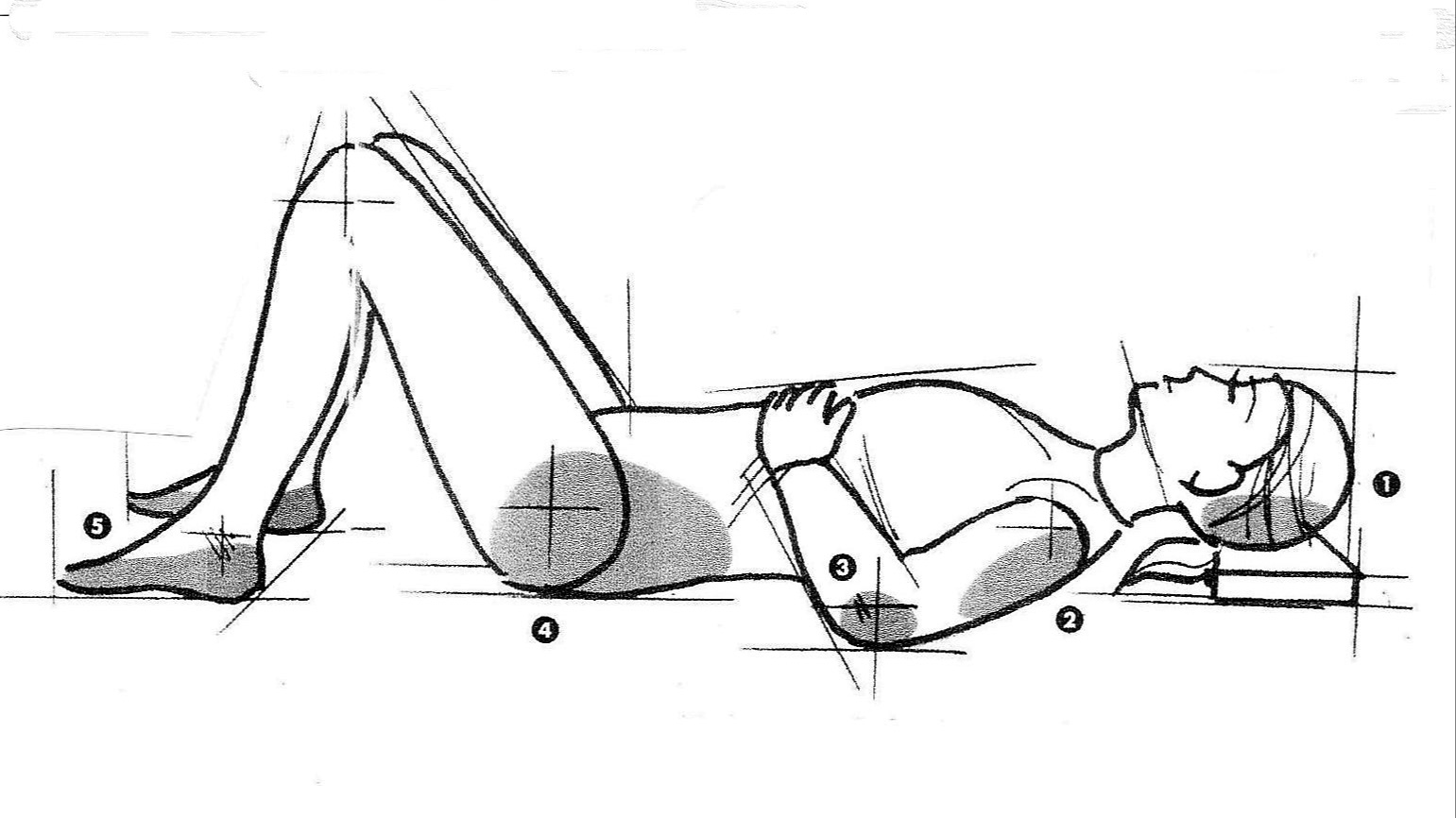
「以下日本語」
I was recently asked a challenging question…
Imagine this: you are an Alexander & Pilates Educator. You are invited to address a large Conference of Physiotherapists in Japan on the Alexander Technique. But there are three constraints:
1. You must finish within 8 minutes.
2. Please show an exercise to help with back pain.
3. Everyone is sitting in chairs in the conference hall. Probably.
Would you accept this commission?
***
My immediate response was:
“Show them semi-supine.”
For those who don’t know – this is a quiet exercise of lying on your back, with your knees bent up and books under your head. I never use it – it’s too slow for me - however, it seemed a perfect fit for this situation. If you click on the image above, it takes you to short explanation in English.
BUT…
She squished up her face - Pilates don't like lying there doing nothing - so we moved on...
I asked her: “What is a challenging thing for people with back pain?”
“Bending.”
“So let’s do 8 minutes on bending.” She liked that idea.
Continuing on with my Markovian* metaphor that an upstream 1% influences a downstream 99% – see my last two Daily – I asked her:
“Do you think people consider the movement of their heads when they bend?”
I didn’t think so. She agreed. You can go online and get advice about how to bend with a bad back, and you will struggle to find anyone who mentions head position.
How about my Pilates readers? How often do you consider the movement of a client’s head when you are teaching a bending movement, or any movement in fact?
I’d wager very little: Welcome to Alexander BodyMapping!
It’s actually the first thing we want people to consider. It’s the 1%. Here’s the exercise we worked out together – adapt it at home with your partner, friends or family.
***
After introducing yourself - and mentioning that you have notes they can access later - ask them to form a group of two people: A & B. Wait. Now ask that person A stand up, turn around to face their chair and imagine picking up something off the seat, while B watches.
2 minutes.
This is activity-based Alexander: doing a simple, practical, everyday thing.
Now tell them to swap roles, do it again, then together share what each saw.
4 minutes.
Now ask them: “Did anyone notice what the head/neck area was doing? Hands up.”
I’ll guarantee very few hands go up. Then you state one of Alexander's discoveries:
“Head movements govern vertebral coordination.”
(Have it showing on a large screen behind you if you can.) Expand upon this idea: pointing out that a head being thrust forward is likely to increase downward pressure on the spine, which is not a great idea if you suffer from back pain…
5 minutes.
This time advise them that the very first joints that need to move are the hips, knees and ankles – while their head and neck go on holiday i.e. they leave the head/spine relationship in the same orientation as they bend forward at the hips. Ask A & B to repeat the exercise with each other and discover if they can leave their heads alone or not?
7 minutes.
Finish with a flourish: you may be surprised that you had not noticed the way your head/spine was moving while you were bending. And perhaps it was not so easy to change. However, with back pain, this could affect the level of pain you experience.
If you’d like notes on this exercise, please get out your smartphone and point it at the screen. (Screen now shows a QR code where they can sign up to get your “exercise”.) This is important – there is so much more you need to communicate about this simple exercise!
8 minutes.
*** THE END ***
For my readers in Japan who are curious to know more, come along to a PILANDES session with me next year. Bring your questions. Dates and booking here:
https://www.bodymindspiritresearchlab.com/workshops/917
I know I promised an announcement today, but I am waiting for Zen Place to confirm some things for me. Sorry about that – I will be making my announcement, let’s say, within the next week!
On Monday, I’m off to Korea to teach, so my Daily will be less frequent. Or not.
Stay tuned.
cheerfully
Jeremy Chance
* “Markovian” comes from mathematics, describing systems where one step shapes all the steps that follow. So even a tiny upstream bias can shift the whole downstream pattern — just as the smallest change in the head/spine relationship can reorganise the entire sequence of movement that follows. This principle underlies Alexander's discovery that an upstream 1% can quietly shape the downstream 99%.
*** JAPANESE ***
8分で何ができますか?
日曜日のセッションで、私は少し難しい質問を受けました。
想像してみてください。あなたはアレクサンダー&ピラティス教育者です。日本の理学療法士が集まる大規模なカンファレンスで、アレクサンダー・テクニークについて話してほしいと招かれました。しかし条件が3つあります。
1. 8分以内に終わらせること。
2. 腰痛に役立つエクササイズをひとつ紹介すること。
3. 会場の参加者は全員、椅子に座ったままであること。おそらく。
あなたなら、この依頼を引き受けますか?
***
私の即答はこうでした。
「セミ・スーパインを見せる。」
知らない方のために説明すると、これは仰向けに寝て、膝を立て、頭の下に本を置くという静かなエクササイズです。私は個人的には使いません——ゆっくり過ぎるので。しかし、この状況には最適だと思ったのです。上記の画像をクリックすると、英語による簡単な説明が表示されます。
ところが……
彼女は顔をくしゃっとしました——ピラティスの人たちは、何もしないで寝ているのが好きではありません——なのでその案は流れました…。
私は彼女に尋ねました。「腰痛の人にとって難しい動きは何ですか?」
「前屈です。」
「では前屈について8分やりましょう。」彼女はそれを気に入りました。
上流の1%が下流の99%に影響を与えるという私のマルコフ的(Markovian)*な比喩を続けながら — 直近の2回のDailyをご覧ください — 私は彼女にこう尋ねました。
「人は前屈するとき、自分の頭の動きを意識していると思いますか?」
私はそうは思いませんでした。彼女も同意しました。ネットで「腰痛の人のための前屈のやり方」を検索しても、頭の位置に触れているアドバイスはほとんど見つからないでしょう。
ピラティス指導者の皆さんはどうでしょう?前屈の動きを教えるとき、あるいはどんな動きであっても、クライアントの頭の動きをどれくらい意識しますか?
おそらくほとんどしていないはずです。ようこそ、アレクサンダー・ボディマッピングへ!
実は、私たちがまず最初に見てほしいのはそこなのです。それが「1%」。ここから彼女と一緒に考えたエクササイズをご紹介します——ご家庭でもパートナーや友人とやってみてください。
***
自己紹介をし、この後でメモを受け取れることを伝えたら、まず参加者に2人組(AとB)になってもらいます。待ちます。次にAに立ってもらい、自分の椅子に向き直って、椅子の上の物を拾うつもりで前にかがんでもらいます。Bはそれを観察します。
これで2分。
これはアクティビティベースのアレクサンダー・ワークです。日常的で実用的な動きを使います。
次に役割を交代してもう一度行い、互いに気づいたことをシェアしてもらいます。
4分。
次に質問します。「頭と首のあたりが何をしていたか、気づいた人いますか?手を挙げてください。」
ここで挙手はほとんどありません。そこでアレクサンダーの発見のひとつを述べます。
「頭の動きが背骨の協調を導きます。」
(可能であれば大きなスクリーンに表示しておきましょう。)そして少し説明を加えます。例えば、頭が前に突き出ると背骨への下向きの圧力が増え、腰痛のある人には良くないことなどです。
これで5分。
次に、最初に動くべき関節は股関節・膝・足首だと伝えます——その間、頭と首は“休暇”に出かけるのです。つまり、前屈するときに頭と背骨の関係を変えずに保つということです。AとBに再度やってもらい、頭を動かさずにできるかどうか探ってもらいます。
7分。
最後は少し華やかに締めます。前屈しているとき、自分の頭と背骨がどう動いていたか、実は気づいていなかったかもしれません。そして変えるのは案外難しかったでしょう。しかし、腰痛の場合、この違いは痛みのレベルに影響する可能性があります。
このエクササイズのメモが欲しい方は、スマホを取り出し、スクリーンに向けてください。(スクリーンにはQRコードが表示され、「エクササイズ」を受け取るために登録できるようになっています。)これは重要です——このシンプルなエクササイズには、まだ伝えるべきことがたくさんあるからです。
これで8分。
*** END ***
日本の読者の皆さんへ。もっと知りたい方は、来年のPILANDESセッションにぜひお越しください。質問も持ってきてください。日程と予約はこちら:
https://www.bodymindspiritresearchlab.com/workshops/917
今日は大切なお知らせをする予定でしたが、Zen Placeからの確認待ちです。すみません!発表は、そうですね、1週間以内には必ずします。
月曜日からは韓国での指導が始まるため、Dailyの更新は少し減るかもしれません。あるいは、減らないかもしれません。
乞うご期待。
*「マルコフ的(Markovian)」とは数学に由来する言葉で、一つのステップがその後に続くすべてのステップを形づくる仕組みを指します。つまり、ほんのわずかな上流の偏りでも下流のパターン全体を変えてしまうのです——ちょうど、頭と背骨の関係がほんの少し変わるだけで、その後に続く動きの連なり全体が再編成されてしまうのと同じです。この原理こそが、上流の1%が下流の99%を静かに形づくるとしたアレクサンダーの発見の土台になっています。
Join Jeremy's (sometimes) Daily
Hear what Jeremy's writing about now — Alexander Technique, PILANDES, Trauma-Informed Alexander, and more.