The Myth of the Core
Apr 17, 2026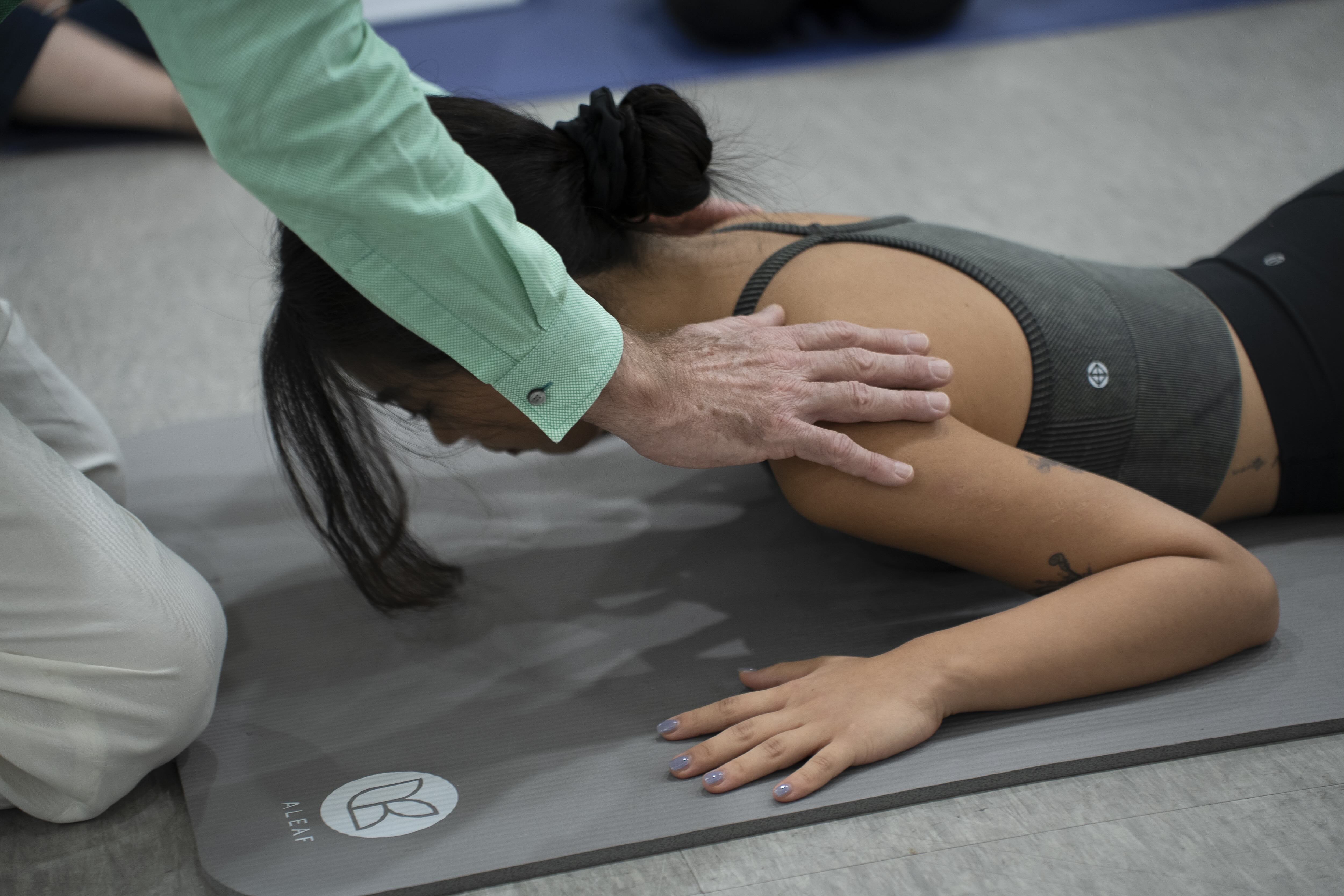
"When I stopped overthinking and just focused on what I'd decided to do, I could feel the breath and the movement start to work together. I want to keep bringing that awareness to where I am right now — and keep exploring better movement." – Pilates Educator @ PILANDES Trial in Japan.
“How do I relate to my core?” wondered Nana.
She was one of several young Pilates Educators who joined me in a recent PILANDES Trial session. Nana was suffering from a scientifically invalidated concept of ‘core’ that still lingers in the Pilates world, causing misery for many.
How did this idea even get out into the world?
The concept of “core” – as a separate functional unit that can be consciously pre-activated before a movement – was developed in the late 20th century within the world of medical rehabilitation. It was due to a simple discovery that those who suffered from back pain were found to be delaying the activation of the transversus abdominis (tummy) muscle before moving.* As the idea crossed over into the field of Sports Science, it turned into the mistaken conclusion that “non-activation is the problem!”
Finally, the concept was adopted by the fitness industry, but by this time the idea had morphed into a simple, distorted formula of: “activate and do”.
Nana’s confusion makes it clear that this concept still persists today.
It is a myth, a harmful myth. It is not supported by science.
In fact, the scientific community slowly abandoned this idea, but the fitness industry took no notice. Originally, Joseph H. Pilates’ exercises did not ask Nana “to activate her core” before moving. During her PILANDES trial, Nana experienced how postural support could happen naturally as she was doing ‘bridge’ - not as a deliberate, separate action that served only to confuse Nana’s body.
Today, modern Pilates seems to have split into two groups:
- Those who already teach core as a dynamic, integrated response to activity — you're on the right track
- Those who cue for engagement before action, and keep cueing throughout — it's time to rethink...
Nana had been a follower of this second approach. Her intuition knew something was wrong. Nana was right. As she was leaving, she declared:
“This session solved a big question I have had for a long time.”
***
I don’t even talk about “core” in my PILANDES work.
Instead, I talk about your underlying postural support. It took 500 million years for this postural support to evolve – don’t you think it is worth trusting? Trusting your Self is a big part of PILANDES. It is also one of the paradoxes you confront as you apply PILANDES to your Pilates movements: the best way to control your exercise is to stop trying to control your exercise. Instead, you learn to trust your postural support to do what it was designed to do. Automatically.
When you stop trying to control, something magical happens...
NEXT: Why muscle cells love PILANDES.
Stay tuned.
* Hodges, P.W. & Richardson, C.A. (1996). "Inefficient Muscular Stabilization of the Lumbar Spine Associated with Low Back Pain: A Motor Control Evaluation of Transversus Abdominis." Spine, 21(22), 2640–2650.
Join Jeremy's (sometimes) Daily
Hear what Jeremy's writing about now — Alexander Technique, PILANDES, Trauma-Informed Alexander, and more.