The Pain That Didn't Get Away
May 26, 2026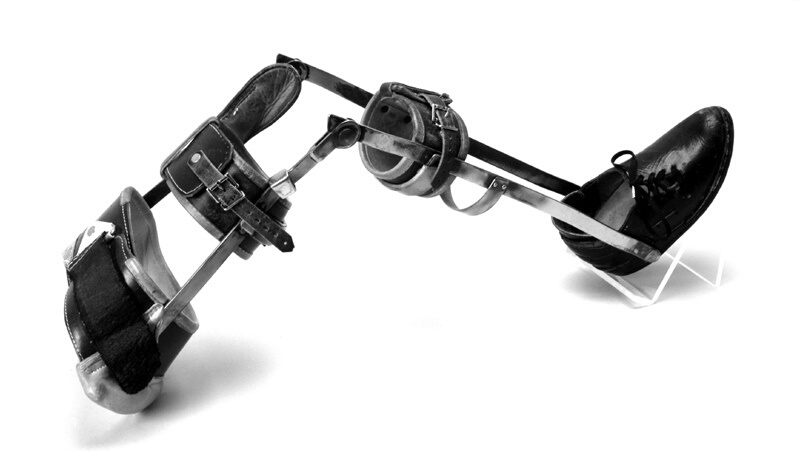
"For clients who tend to over-tense, teaching with the Alexander approach helps the tension release much more easily — and their movement starts to connect up." — zen place Pilates educator @ PILANDES Trial.
Acute pain is healthy, constructive and prompts you to do what needs to be done. Think sprained ankle, broken leg. It may last a few weeks — even linger longer in serious injuries — but it still slowly fades away within a healthy time frame.
Chronic pain is debilitating, confusing and often has no effective remedies. It is defined as lasting for 3 months or longer and — rather than fade away — chronic pain can increase with time, and spread to other areas. No one feels healthy with this kind of pain.
I won't dig into pain science now, except to summarise that today scientists are starting to think of long-term chronic pain as a processing problem of the brain and nervous system, rather than a physical phenomenon needing treatment.
In other words, they suspect it is being perpetuated by a malfunctioning brain.
Therefore, when pain appears, you must be vigilant and act quickly. Do everything you can before the onset of chronic pain and its suspected brain dysfunction. I discovered this lesson through my mother because — when presented with a long-term problem — she acted very fast…
***
Mum fractured the calcaneus bone — her heel — in London early one year, then six months later in Sydney was having increasing difficulty with walking. She went to a specialist who, after careful examination, declared:
"You will need callipers, Mrs Chance," he said, i.e. a brace on her leg. "Let's make an appointment for a fitting next month."
Which she did — but the thought of callipers horrified her.
My mother came home and thought about it. Her son was an Alexander teacher (me), but so were her two daughters, her best friend and her son-in-law. She decided that all of us had to each give her an Alexander lesson one day a week until her leg was better. Of course we all agreed immediately.
After a month, she was happy and rang the specialist, talked to his secretary, and cancelled her appointment for fitting the callipers. A few minutes later, the phone rang again:
"Mrs Chance?"
"Yes."
It was the doctor himself: "You cancelled your appointment with me. May I ask why?"
"Oh, my foot is better, doctor. I don't need the callipers."
There was a pause.
"Mrs Chance, I find that very hard to believe. Would you allow me to reexamine your leg? I won't ask you to pay for this appointment."
My mother agreed and turned up a week later. After examining her foot, the doctor stopped, looked at my mother and declared:
"Mrs Chance, this is not the same foot that I examined 6 weeks ago. What did you do?"
My mother proudly told him about all the Alexander teachers in her family and how they had retrained her way of walking. After that, the doctor started referring patients.
My mother never had much trouble with that foot again.
***
PILANDES — based as it is upon Alexander's discoveries — also retrains your patterns of coordination. This happens specifically within the Pilates exercises, but the PILANDES Program also has Open Studio time where students are free to explore other movements, including walking just like my mum.
All movements — not just Pilates exercises — can be cued differently so that you think differently and effectively move in a new way. As today's emerging pain science suspects, these new patterns of coordination act as circuit breakers of persistent pain: by ushering in novel information for your brain to process. The new information can trigger the brain to reassess how it is predicting and producing pain signals.
With Alexander lessons now spanning three centuries of application, there are simply too many examples of the efficacy of this retraining approach to discount it. Pain is relieved by postural retraining: this is the practical conclusion backed up by a landmark randomised controlled trial funded by the NHS in the UK and published in the British Medical Journal in 2008. It involved 579 participants recruited from 64 NHS general practices. The study found an 86% reduction in days of back pain for participants who undertook 24 Alexander lessons.*
You must catch pain in its early stages, before it starts to take on a life of its own.
At my PILANDES workshop, feel free to talk about any pain you experience in your Pilates practice. Don't let it slip.
NEXT: "I could go on forever."
* Little P et al., "Randomised controlled trial of Alexander technique lessons, exercise, and massage (ATEAM) for chronic and recurrent back pain," BMJ 2008;337:a884.
2026 Workshops
LONDON:
August 8 – PILANDES
August 23 – Trauma-Informed AT
NEW YORK:
October 24 – PILANDES
October 25 – Trauma-Informed AT
Join Jeremy's (sometimes) Daily
Hear what Jeremy's writing about now — Alexander Technique, PILANDES, Trauma-Informed Alexander, and more.