The Frog with the Rotated Eye
May 04, 2026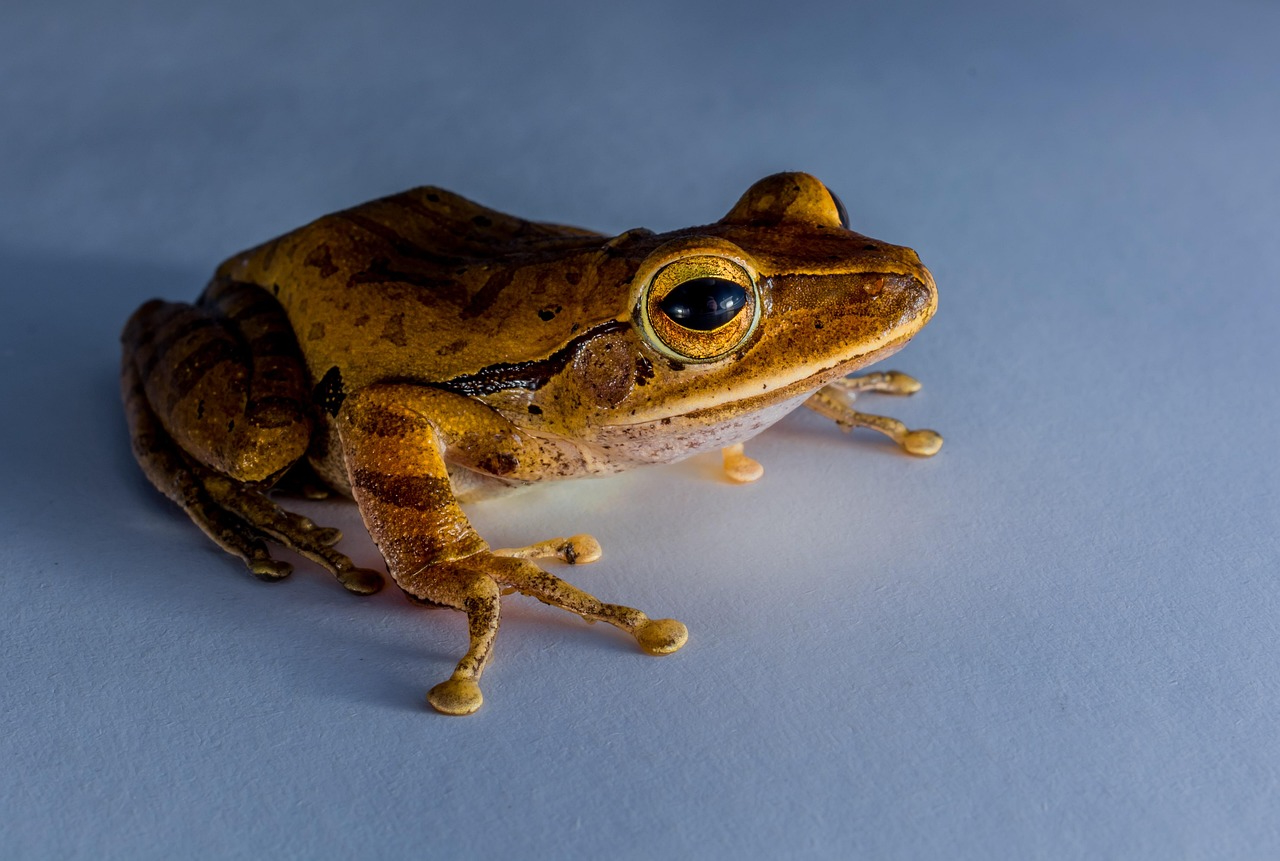
“All the darned fools in the world believe they are actually doing what they think they are doing.” – FM Teaching Aphorism #27
How do you know what is real?
You don't, that's the conclusion most philosophers come to. We live in a world of sensory perceptions and the interpretations we make of them — and reality is our first, best guess. Science backs this up, as we shall see…
What follows is a simplified retelling of several classic neuroscience experiments from the 1940s–1960s. Much of the foundational work was done in the laboratory of Roger Wolcott Sperry — later a Nobel Prize winner — and it was there that a landmark 1959 paper emerged that changed how we understand the brain.*
***
A frog has an incredible ability to use its tongue to pluck an insect from the air and eat it. Specialised cells in the frog's retina map of all the space around the frog so a specific group of eye cells can signal to the frog which area of space the insect currently occupies, and which direction it is moving…
The frog uses this information from the eye to send his tongue to that area.
Insect dies.
Then the scientists did a dreadful thing: they surgically rotated the frog's eye a full 180 degrees. After doing that, they introduced another insect into the same area of space where the first insect lost its life. What do you think happened this time?
Insect lives.
The frog's tongue did not go to where the actual insect was in space. The frog's tongue went where it was told to go by its eye. But that eye had been rotated, so the tongue went to the wrong area of space. There was no insect there.
The conclusion?
The frog doesn't actually see the insect. The frog sees its map of the insect. When the map goes wrong — because of men in white coats — so does the frog. This finding implies a lot for your Pilates practice.
As you will discover next in my Science Letter, we use maps in an area called Body Schema to guide our movement system. Like the frog, our life can depend upon the accuracy of our maps. However, our maps exhibit neuroplasticity, which means they can and do slowly but surely become inaccurate.
I am sure you have experienced, for example, lying on your back, lifting up your legs while bending at the knees so your legs arrive in tabletop position — only to have your educator rudely tell you your legs are too low or too high or not bent enough. You believed you had them in the correct position, but your Educator told you otherwise.
It's a little disconcerting isn't it?
However, you can improve your map. Unfortunately, the frog with the rotated eye can never figure out his new map and start catching insects again — the information is hardwired into his eye. However, human maps are flexible. Neuroplasticity in Body Schema — an area I will explore later — allows you to change maps for the worse, and you can also improve them for the better.
In PILANDES, we deeply understand the critical nature of maps.
When instructing clients, if you believe they are actually hearing what you think they are hearing, then in Alexander's eyes that makes you “a darned fool”. Clients don't have your map, so they don't hear your words the way you mean them. They hear your words according to their own map, just like the frog.
Did you try to improve their map? Or yours, for that matter?
The PILANDES Program introduces you to BodyThinking Online — a series of 64 short videos I made that cover all the maps that can lead you into more precision and control. Every trial includes some major bodymapping — like the frog, you might be surprised by what you didn't know you didn't know.
You can gain access to BodyThinking for ¥7,000 as part of my ongoing coaching program — which gives you access to me, and everything I have produced over the last 15 years, which is quite a lot. When you join, I hop on a call with you to see what is going to help with your situation — whether you're an AT teacher, a student, Instructor or whatever. The link to sign up is here:
https://www.atsuccess.com/offers/5dW7qttb/checkout
NEXT: How Long Will Your Arm Be Tomorrow?
Stay tuned.
*What the Frog's Eye Tells the Frog's Brain (1959), Jerome Y. Lettvin, Humberto R. Maturana, Warren S. McCulloch, and Walter H. Pitts. It fundamentally reshaped the understanding of visual processing by demonstrating that the frog's retina performs complex information processing before signals reach the brain.
Join Jeremy's (sometimes) Daily
Hear what Jeremy's writing about now — Alexander Technique, PILANDES, Trauma-Informed Alexander, and more.